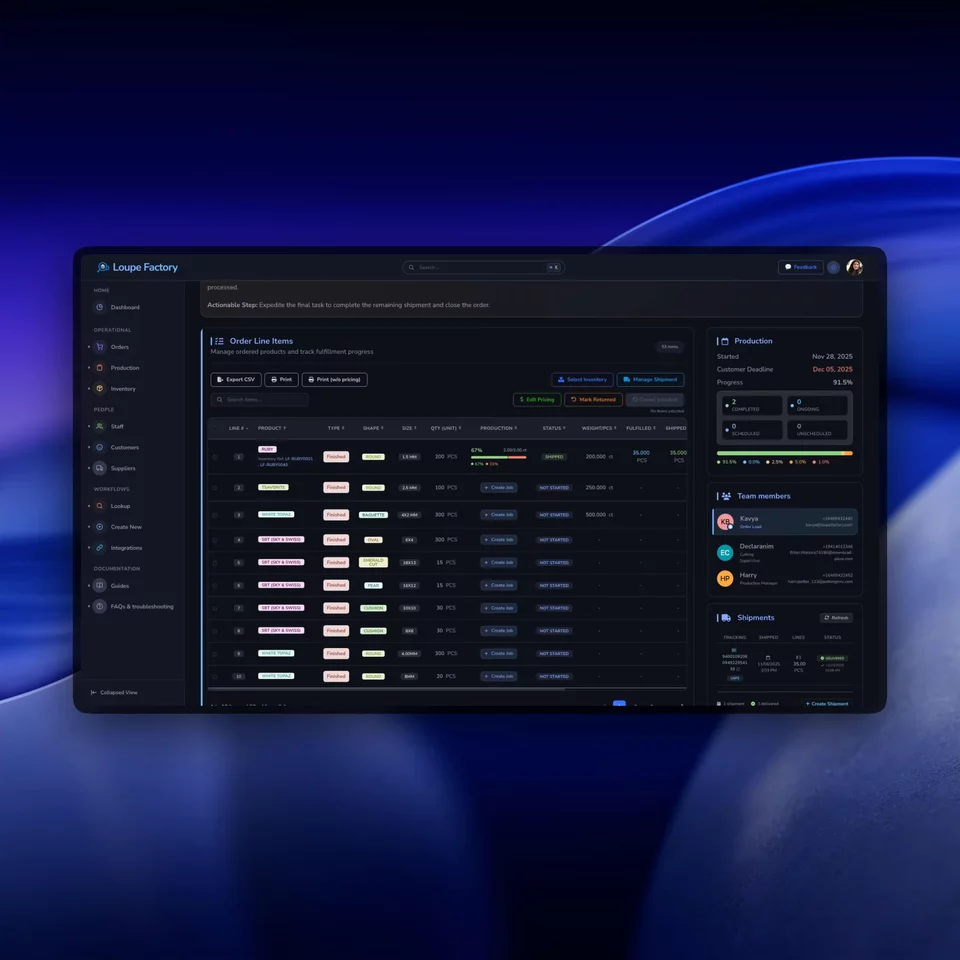

Production Management

Control every production job from material issue to finished output.

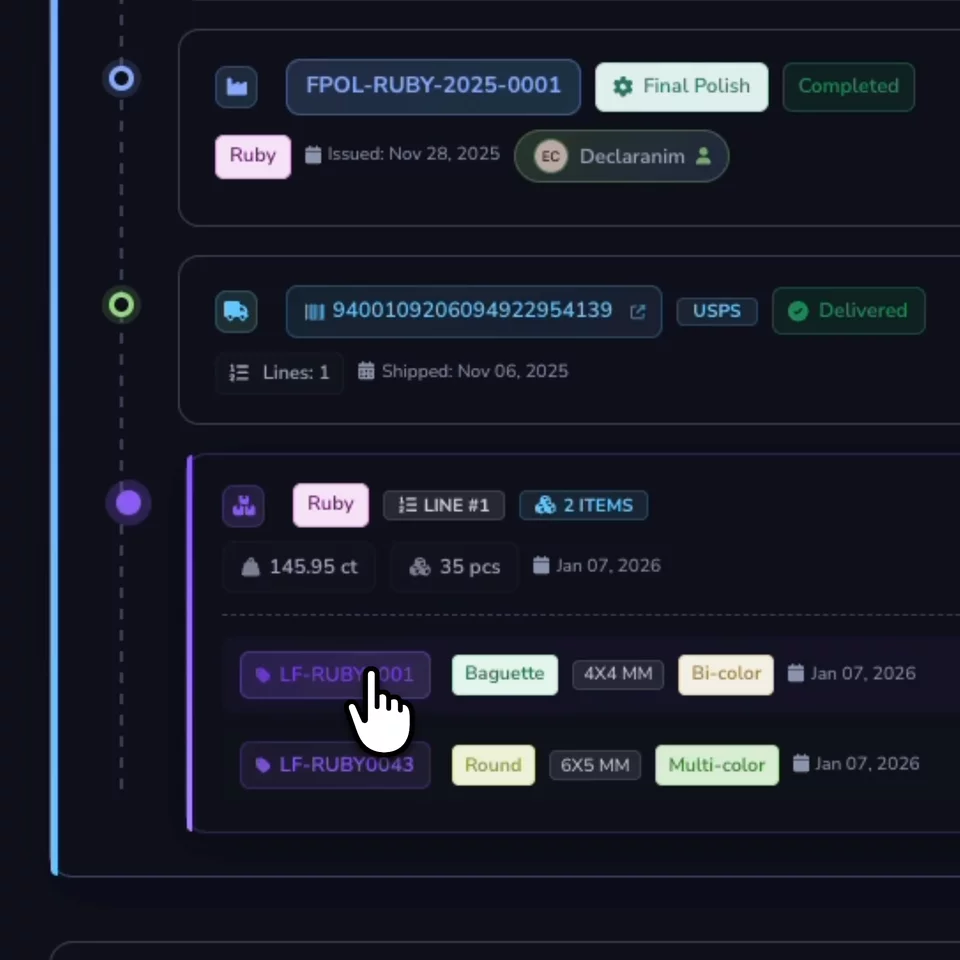
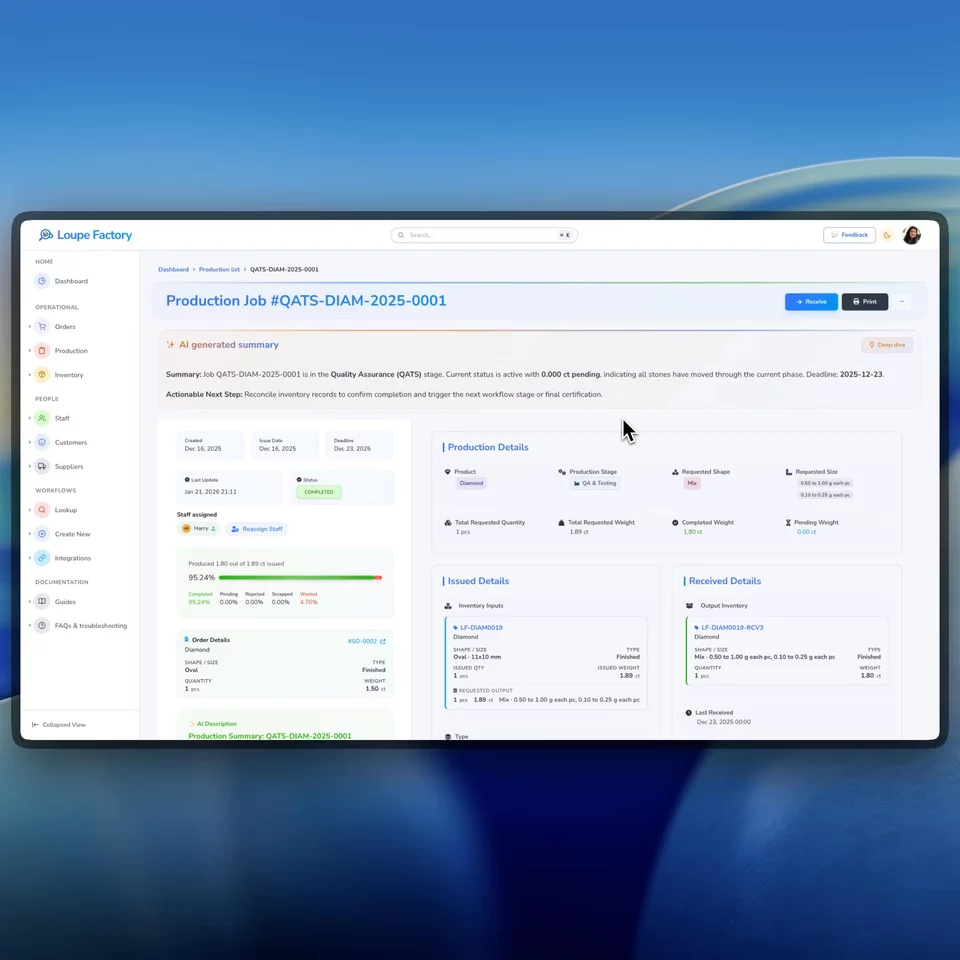
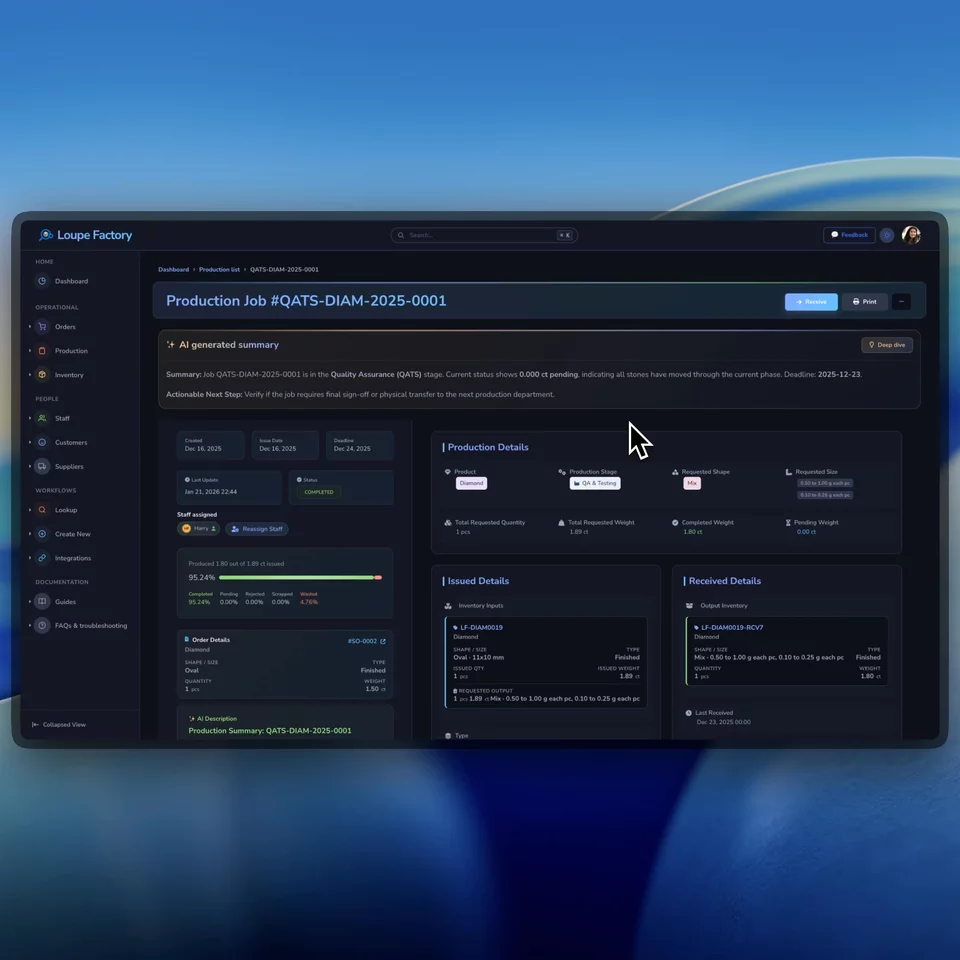
Loupe Factory connects source inventory, production tasks, issued weight, pending weight, finished goods, waste, scrap, and rejected material in one production record.

For global manufacturers and wholesalers, production is where inventory, labor, customer promises, and margin meet. Loupe Factory helps teams see what went into a job, what is still pending, what came out, and what changed along the way.

Material issue and receipt tracking WIP status by pending weight Source-to-output traceability

Production job control
Loupe Factory production management screen in light mode. Loupe Factory production management screen in dark mode.
Issue Deduct source inventory when work begins.
Track Read job status from issued dates and pending weight.
Receive Record finished output, waste, scrap, and rejected weight.

How it works

Every job keeps the material story attached.

Production breaks down when the job card, inventory deduction, shop-floor task, output receipt, and customer update live in different places. Loupe Factory keeps those pieces connected so managers can understand the job without reconstructing it from messages and spreadsheets.

01

Create the job from real source inventory

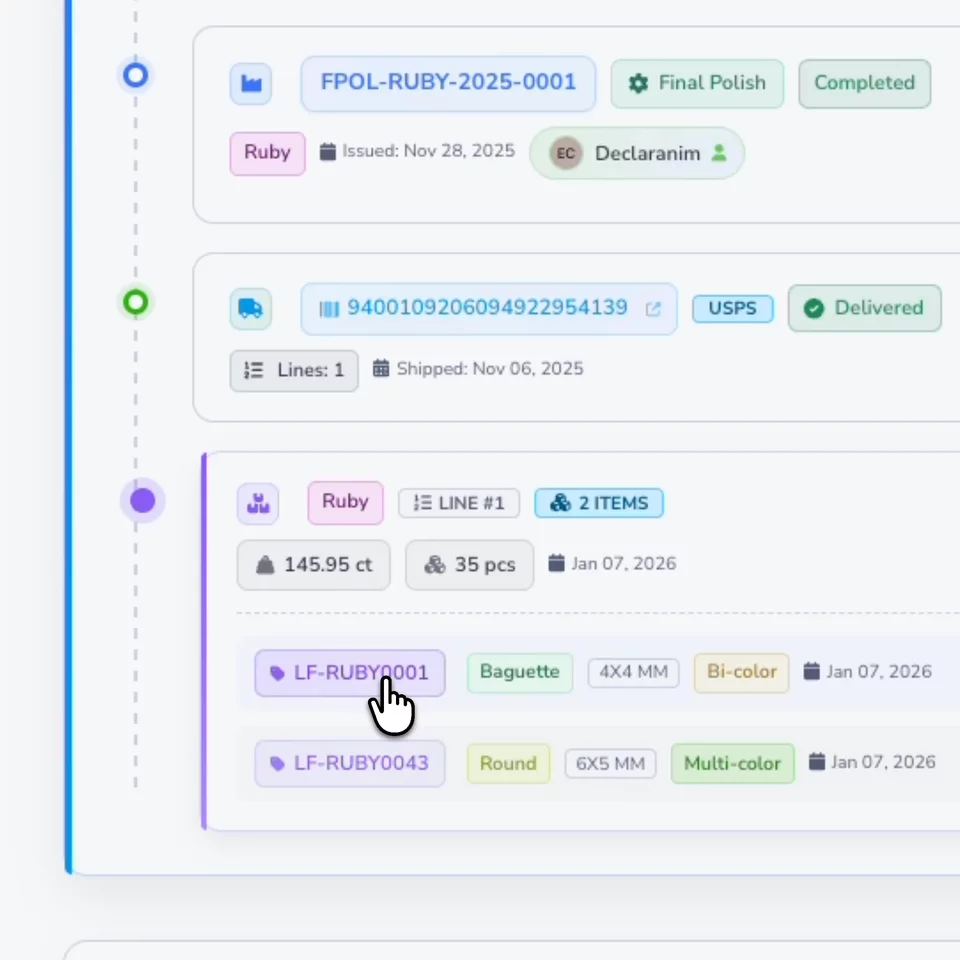
Start production with a job header, input inventory, task context, issued dates, quantities, and weights. Issued materials are deducted from source inventory so stock reflects work already committed to production.

Job header | Inputs | Tasks | Issued weight

The team sees what was issued before the work moves across departments.
02

Read WIP from dates and pending weight

Jobs can be unscheduled, scheduled, ongoing, or completed based on issued date and pending weight, rather than a vague manual label that no one trusts after the first change.

Unscheduled | Scheduled | Ongoing | Completed

Managers can focus on jobs that still have material unaccounted for.

03

Receive output without losing production history

Record finished goods, scrap, waste, rejected material, and edits while preserving the link back to the job and the source inventory that started it.

Finished goods | Waste | Scrap | Rejected material

Yield, loss, and traceability conversations use the same job record.

Production-facing workflows

See how production control fits into the wider operating system.

These demos show the surrounding workflows production teams depend on: scan-ready traceability, operational visibility, and data portability. The production record itself remains the source of truth for issued material, pending weight, output, waste, scrap, and rejected material.

Scan-ready movement

Trace movement

Keep material movement easier to identify as work changes hands.

Production control depends on knowing which stock moved into a job and what came out. Loupe Factory supports scan-ready operating workflows around inventory movement so teams can identify records faster during receiving, issuing, packing, and shipping.

  • Keep item and lot context easier to find across operational handoffs.
  • Reduce the time spent matching physical goods to system records.
  • Support traceability work around production inputs and finished output.
Operational visibility

See pressure early

Review the operating picture before a delayed job becomes a missed promise.

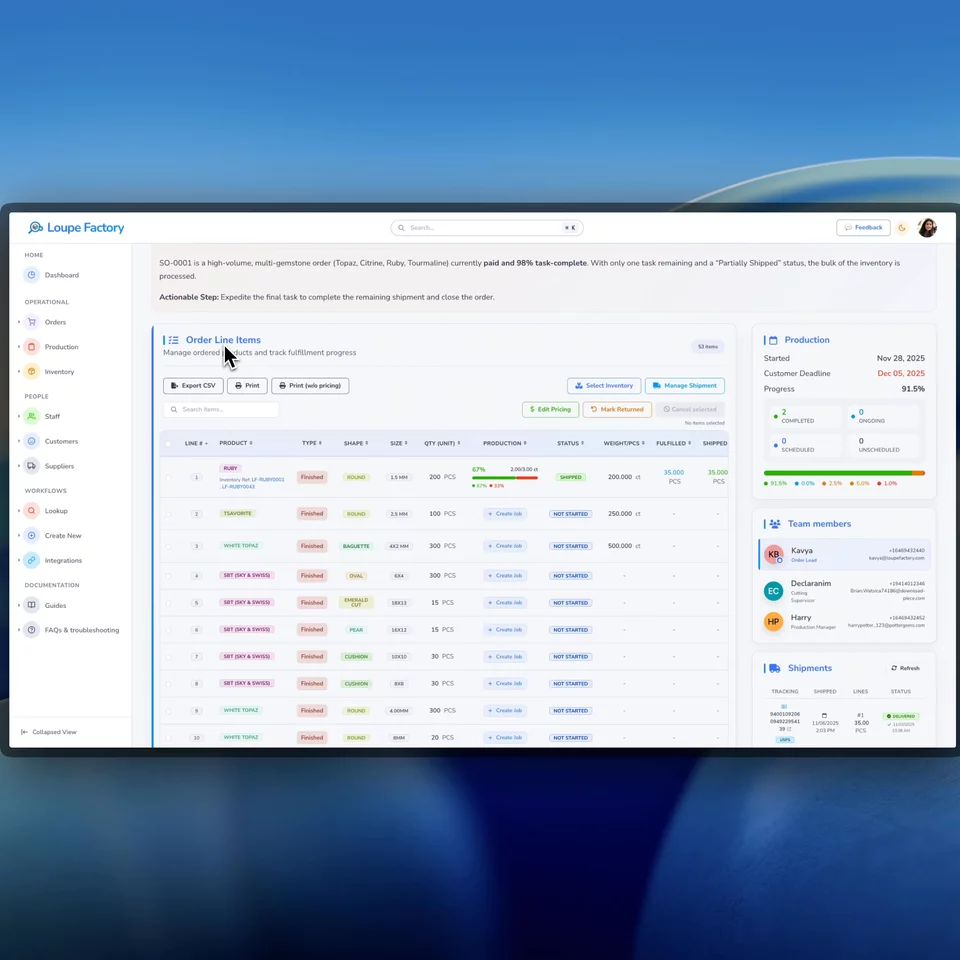
Production managers need to know where work is stuck, which orders may be affected, and whether inventory is tied up in WIP. Loupe Factory keeps production close to operational reporting so teams can review exceptions instead of waiting for a weekly spreadsheet.

  • Review production, inventory, and order context together.
  • Spot open work and operational pressure before customer updates are due.
  • Give managers a clearer path from dashboard review to job details.
Production data portability

Keep records usable

Production data should stay available when teams need to review or share it.

Manufacturing teams often need production information for audits, customer questions, internal costing, and operational review. Loupe Factory is built to keep data structured and portable instead of locking important context inside one person's spreadsheet.

  • Keep job, inventory, and output records structured for review.
  • Make production history easier to search than scattered files.
  • Support cleaner handoffs between production, warehouse, and finance.

Built for real production

Track the details that decide yield, timing, and trust.

A production system has to account for more than whether a task is done. It has to show what material was issued, what is still pending, what output was received, and what loss or rejection occurred before the job closed.

  • Inputs, tasks, and outputs stay connected

    Follow source inventory into the job, through task context, and into finished goods or byproducts.

  • Pending weight shows what remains unresolved

    Progress reflects issued, received, waste, rejected, and scrapped quantities, which gives WIP status a practical basis.

  • Edits can refund and reapply inventory movement

    When a job changes, Loupe Factory can reverse previous deductions and apply the updated inputs cleanly.

  • Waste, scrap, and rejected output stay visible

    Record what did not become saleable finished goods so yield and costing discussions use job-level data.

  • Finished output can create destination inventory

    Receiving output can create or update destination inventory for finished goods, scrap, waste, or rejected material.

  • Trace finished goods back to production history

    Investigate customer questions, internal issues, or inventory changes by reviewing the job and source material behind the output.

FAQ

Questions production teams ask before switching.

The hard part is not creating a job. It is keeping inventory, work-in-progress, output, loss, and customer promises aligned after the work changes.

Yes. Loupe Factory connects production inputs, jobs, outputs, and related inventory records, so finished items can be reviewed against the source materials and production work behind them.

Yes. Creating a production job can deduct issued source inventory, and receiving production output can create or update destination inventory for finished goods, scrap, waste, or rejected material.

Production status is based on issued dates and pending weight. A job is ongoing when issued work has started and pending weight remains. It is completed when received, waste, rejected, and scrapped quantities account for the issued amount.

Yes. Loupe Factory lets teams record finished output along with waste, scrap, and rejected material so the job can explain where issued weight went.

Loupe Factory is designed to handle production edits by refunding previous deductions and applying the revised inputs, so inventory can stay aligned with the corrected job record.

Production control

Give production one record from issued material to finished output.

Use Loupe Factory to connect jobs, source inventory, task context, output receipts, waste, scrap, rejected material, and WIP status so every team can see what happened and what remains.

Source-to-output traceability Inventory aligned with jobs WIP status by pending weight

Supercharge your business

With Artificial Intelligence ✨

Get started with Loupe Factory

Cookies & Privacy

We use non-essential cookies (like analytics) to improve your experience. In your region, consent is required. You can change your choice anytime in Privacy Choices. Learn more.

You can update your cookie choices. Manage cookies